Precision & Clarity
We define terms and interfaces with uniform language, clarifying what users can observe and adjust in common operational dashboards.
Altex Momentum • Platform briefing
Altex Momentum serves as a premier knowledge hub for AI-powered trading operations, delving into automation engines, real-time monitoring dashboards, and governance of workflows used in today’s markets. Our content is crafted for crisp insight and apples-to-apples evaluation, highlighting system architecture, typical configuration surfaces, and how monitoring views are organized for rapid decision support.
Altex Momentum delivers concise, premium explanations of core elements found in AI-driven trading stacks, from orchestration engines and live dashboards to event records and configuration governance. The aim is to illuminate how these pieces connect, what they enable in day-to-day operations, and the questions they are designed to resolve.
We cover topics like access governance, audit trails, data handling standards, and session oversight with an emphasis on enabling informed evaluation. Material is for general educational use and should not be considered personalized advice.
Our aim is to deliver clear, neutral, and well-structured guidance about the tools used to automate workflows and supervise market operations. We focus on what capabilities provide, how configurations are typically organized, and which safeguards help prevent operational mistakes.
Altex Momentum seeks to improve understanding of system behavior and governance—covering configuration checks, risk thresholds, monitoring routines, and incident-oriented logging—through plain language, consistent terminology, and governance-conscious framing.
Altex Momentum is steered by values that elevate accuracy, openness, and responsible presentation of financial technology concepts. We structure content so readers quickly grasp what a feature does, its operational impact, and how it’s typically reviewed.
We define terms and interfaces with uniform language, clarifying what users can observe and adjust in common operational dashboards.
We spotlight logs, status signals, and concise summaries as foundational elements for tracking system activity.
We frame automation topics with guardrails like limits, capacity rules, and monitoring practices that support disciplined governance.
We design for legibility, clear headings, and mobile-friendly layouts so content is accessible across devices and contexts.
We avoid outcome-centric statements and keep descriptions informational, supporting responsible interpretation of financial tooling.
We refine structure and explanations to stay current with evolving operational patterns and review workflows.
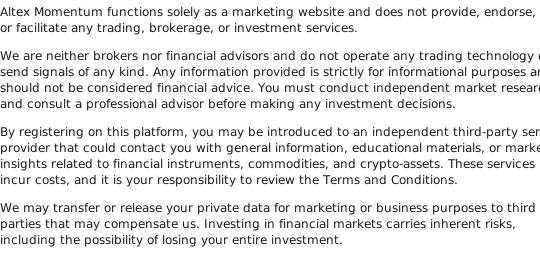
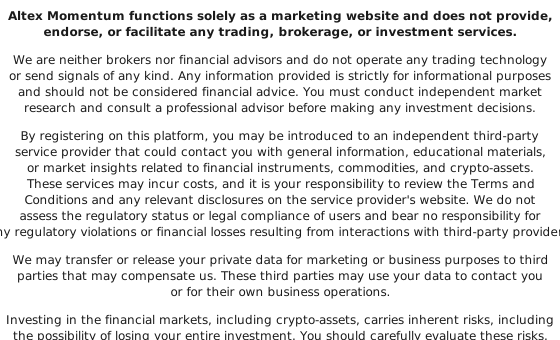
This website functions solely as a marketing platform and does not provide, endorse, or facilitate any trading, brokerage, or investment services.
Read More